
You’re driving down a quiet road when your car suddenly sputters and stops. The sun is sinking, the street is empty, and your heart skips a beat. For some, this is the moment panic takes over. For others, it’s just another problem to solve.
True confidence in life doesn’t always come from grades or awards—it comes from knowing you can handle yourself when no one else is around. Yet most classrooms focus on formulas and essays, leaving practical life skills sitting on the sidelines. These are the lessons that prepare you for life’s unexpected detours, and they’re often learned too late.
Beyond Stereotypes, Into True Independence
A stalled car on a quiet road can feel like a nightmare for anyone who’s never handled one. But for someone who knows how to check the oil, top up the coolant, or swap a flat tire, it’s just another problem to solve. The difference isn’t luck—it’s skill.
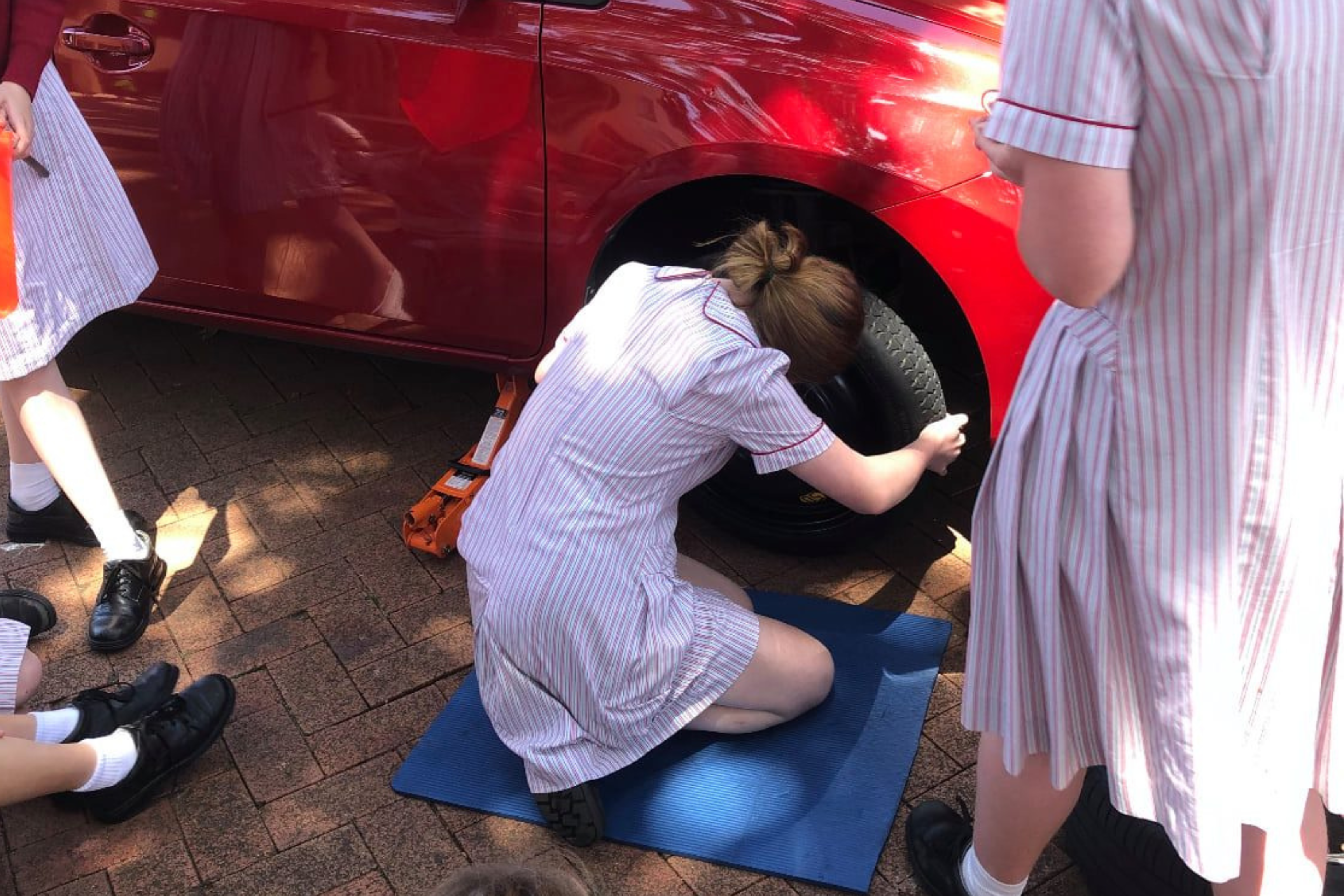
That’s the freedom a group of Year 11 girls in Sydney recently experienced. Instead of spending the day behind desks, they rolled up their sleeves and got hands-on with real-world learning. With the help of Galmatic, a female-led car care team that has guided more than 100,000 teens, they practiced the kind of skills that turn panic into confidence.

These weren’t just lessons in car maintenance—they were lessons in self-reliance. Every lug nut tightened and dipstick checked was a step toward independence. Because confidence doesn’t just appear; it’s built one practical skill at a time. And often, the first spark comes from realizing you can keep moving forward even when life throws a flat in your path.
Stella Maris and Galmatic: Turning Lessons Into Real-World Confidence
In Sydney, Australia, Stella Maris College recently decided to bring life skills out of the textbook and into the real world. Year 11 girls participated in a hands-on car maintenance workshop led by Galmatic, a female-led automotive education team known for teaching teens the practical skills that many new drivers never get to learn.
In small groups, students moved step by step through everyday car scenarios. They learned how to change a tire, check oil and coolant levels, read tire pressure, and respond safely after a minor accident or roadside breakdown. Each skill took a situation that could have been stressful and turned it into something manageable. For the girls, fear gave way to focus, and uncertainty became confidence.
Galmatic, founded by Eleni Mitakos, has taught over 100,000 teenagers each year how to stay safe and self-sufficient behind the wheel. Mitakos explains that the goal is not just mechanical know‑how, but comfort and awareness. Teen drivers are in charge of heavy, expensive vehicles, and ignoring small problems can create major risks. Learning to notice and address issues is a direct investment in personal safety and independence.

Stella Maris included this workshop in its Essential Life Skills program, which recognizes that independence and resilience matter as much as academic success. Teachers and parents praised the session for giving young women the tools to help themselves when immediate assistance is not available.
Moments like this are more than skill-building exercises. They are mindset shifts. A flat tire stops being a crisis and becomes a challenge that can be solved. Each time a teen realizes she can tackle a problem on her own, she strengthens the foundation of confidence that will carry her into adulthood.
Community Applause for Life Skills in Action
When Stella Maris College shared its car maintenance workshop online, the reaction was instant and overwhelmingly positive. Parents, alumni, and local community members celebrated the school’s decision to equip young women with real-world skills that extend far beyond the classroom.
Many parents saw the program as more than a car care class—it was a lesson in independence and inner strength. Kristy Smith called it the type of education “our kids need in every school,” while Vicky Jones wished she could have joined, applauding the school for teaching girls “how to be strong and independent.” Sandra Sieb even joked about wanting a session for mums.

Former students also chimed in with excitement. Patricia Brizzi summed up the sentiment shared by many: “…all high schools, especially girl schools should do this and learn from this!” Peta Brown reflected that while she once took automotive electronics as a physics elective, this dedicated workshop gave today’s students a more hands-on, confidence-building experience.

Current parents and alumni echoed similar enthusiasm. Kathryn Bran, a Year 11 parent and alumna, called it a “really worthwhile session” and shared that it sparked a lively dinner conversation about safe and knowledgeable driving. Other community members reflected on how education has evolved. Maureen Murphy remarked, “School was never like this back in the 50’s.” Meanwhile, Nina Gordon praised the program as “really smart” and said it should be taught everywhere.

These comments highlight more than simple approval. They reveal a growing desire for education that builds practical independence and confidence—skills that last long after graduation.
Why Schools Should Teach Practical Life Skills
Graduating at the top of your class might feel like success, but it can feel hollow when real life throws its first challenge and you do not have the tools to handle it. Many students leave school with strong academic records but struggle with essentials like changing a tire, managing stress, or making confident decisions in unfamiliar situations.

Recent surveys show this gap is widespread. A report revealed that almost one in three high school graduates feel unprepared for life after school, especially for tasks like managing money, understanding tax forms, or navigating unexpected challenges. In addition, life skills education provides much more than practical “how to” knowledge. It nurtures resilience, confidence, and emotional intelligence, shaping the kind of mindset that thrives under pressure. A study evaluating a life skills program for adolescents in India found a 66.6 percent improvement in school attendance, a 4 percent boost in perceived self‑efficacy, and gains in resilience and gender-equitable attitudes.
The World Health Organization (WHO) defines life skills as a set of essential competencies like problem solving, decision making, communication, empathy, and emotional regulation—skills that prepare us to act effectively when life takes an unexpected turn. Employers are noticing these gaps too. Surveys of U.S. and UK businesses consistently report that graduates lack soft skills and workplace readiness, especially critical thinking, adaptability, and real-world problem solving. Furthermore, research from the University of Sydney and IZA also emphasizes that adolescence is a critical period for building skills like grit, self-control, and real-world problem-solving. Programs that focus on social-emotional learning and applied life skills during these years create long-lasting benefits
As such, integrating life skills into school curricula bridges the gap between academic success and real-world independence. It empowers students to not just think, but to act with confidence, responsibility, and compassion—qualities that endure long after the final report card.
From Roadside Skills to Real-World Strength
True confidence often appears in those quiet moments when a young person thinks, I can handle this on my own. For the girls at Stella Maris College, that feeling did not come from a textbook. It came from a hands-on experience that transformed uncertainty into action.
Assistant Principal Amy Smith observed that students left the workshop with a visible boost in self-assurance. What began as a simple lesson in car care evolved into something more profound: a lesson in self-reliance. This type of confidence reaches far beyond the road. When teens know they can face unexpected challenges—whether it is a flat tire or a completely different real-life problem—they move through the world differently. Founder Eleni Mitakos has witnessed this transformation many times through Galmatic’s programs. She explains that practical skills do more than solve an immediate problem. They protect, they empower, and they create a lasting sense of capability that young people carry into adulthood.
Workshops like this are more than lessons in mechanics. They shift a mindset. Hesitation turns into readiness, and fear transforms into freedom. For these students, each small victory on the roadside became a lifelong reminder: I am capable.
5 Life Skills About Cars Every Teen Should Know
Practical skills give teens confidence and independence. These five are simple to learn and make a big difference:
1. Change a Tire. Knowing how to replace a flat turns a roadside emergency into a quick fix and keeps you safe in remote areas.
2. Check Tire Pressure. Proper tire pressure prevents blowouts and improves fuel efficiency.
3. Check Oil and Coolant. A quick check can prevent engine damage and expensive repairs.
4. Handle Breakdowns Safely. Turning on hazards, moving to safety, and calling for help prevents panic during unexpected stops.
5. Do Basic Car Checks. Inspecting tires, fluids, and batteries regularly builds confidence and keeps the car in top shape.
These simple skills do more than keep a car running—they give teens the independence to face challenges calmly and safely.
From Roadblocks to Self‑Reliance
Real education is not only about passing exams. It is about meeting life’s surprises and thinking, I can handle this. When a student learns to change a tire or check the oil, she is doing more than fixing a car. She is claiming her independence. Stella Maris College proved that even simple skills can spark a mindset shift. Fear becomes freedom. Hesitation turns into action. A young person who can solve a problem on the roadside carries that same courage into every challenge life presents.
Life will always bring its “flat tires,” both literal and figurative. The question is whether we wait for rescue or take the first step toward independence ourselves.
Featured Image from Stella Maris College, Manly on Facebook
