
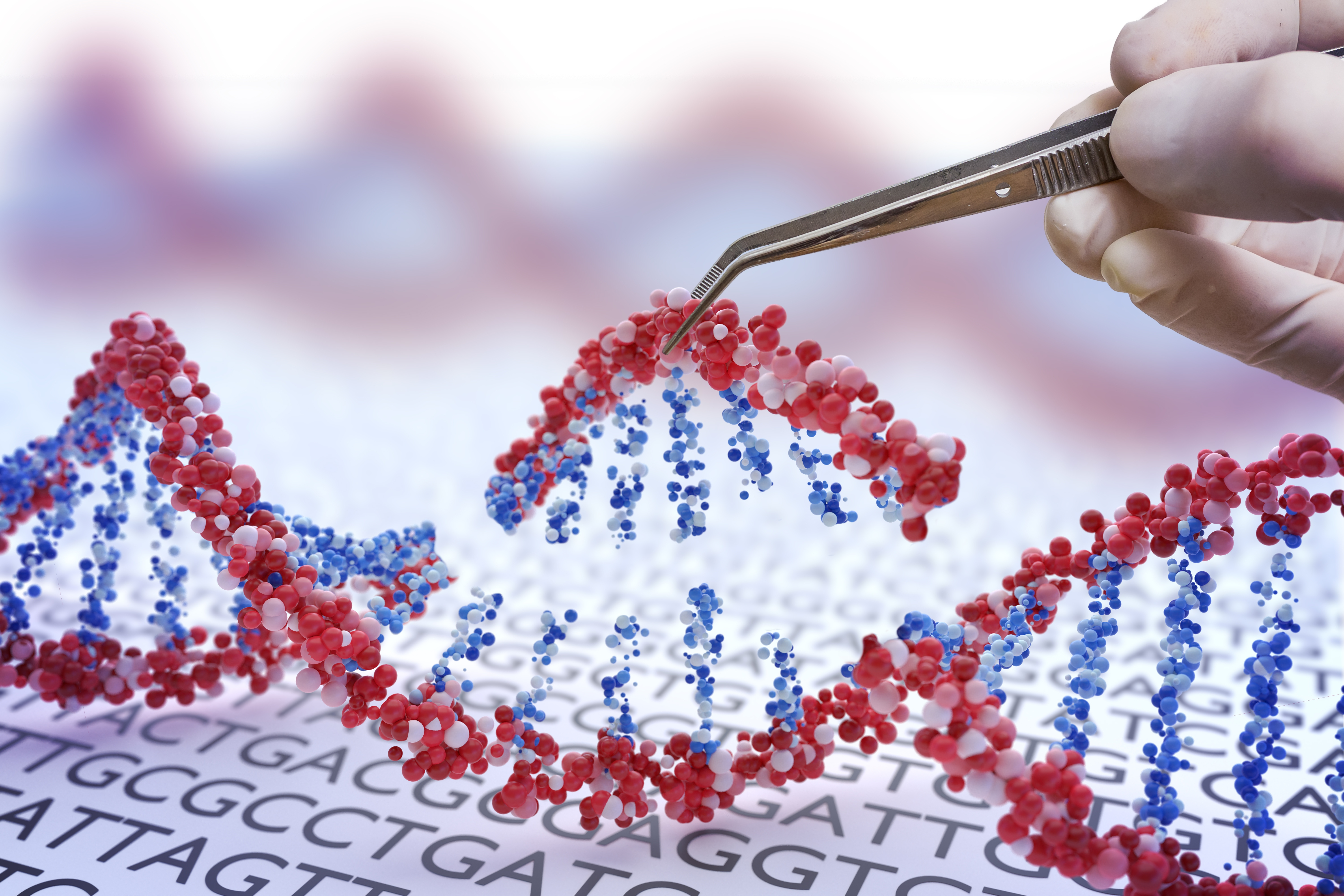
A team of scientists recently announced a major breakthrough: they successfully used the gene-editing tool CRISPR to remove the extra chromosome 21—the genetic marker for Down syndrome—from human cells in a lab. It’s a significant step in genetic research, moving beyond editing single genes to tackling an entire chromosome. While this doesn’t mean a “cure” for Down syndrome is around the corner, it does open a new chapter in genetic medicine. So, what did the scientists actually accomplish, what does it mean for the future, and how should we approach this groundbreaking science?
What Did the Scientists Actually Do?

First things first, this experiment didn’t happen in a person. It was conducted entirely in a lab, using human cells in a petri dish. The researchers, led by Dr. Ryotaro Hashizume in Japan, worked with two types of cells taken from a donor with trisomy 21: mature skin cells and special stem cells. These stem cells, known as iPSCs, are “master” cells that can be programmed to become any type of cell in the body.
Their goal was to remove only the extra copy of chromosome 21 without damaging the two other essential copies. To do this, they used the gene-editing tool CRISPR-Cas9.
You can think of CRISPR as a pair of genetic scissors paired with a GPS. The scientists programmed this “GPS” to find a unique genetic “address” that existed only on the extra chromosome.
Once the CRISPR system arrived at the correct address, it didn’t just make one clean cut. Instead, it made multiple cuts all along that one specific chromosome. This process essentially shredded the target, causing it to break apart and get lost the next time the cell divided. The result was a “rescued” cell with the correct number of chromosomes. By successfully targeting only the extra one, the team demonstrated a new level of precision in gene editing.
What Happened to the Cells After the Extra Chromosome Was Removed?

Removing the extra chromosome did more than just fix the cell’s genetic count; it tangibly improved their health and function in the lab. The “rescued” cells began to behave more like cells without the trisomy.
First, they started to grow and multiply at a faster, more typical rate. At the same time, the cells showed signs of being under less stress. They produced significantly lower levels of reactive oxygen species (ROS), which are harmful molecules linked to cellular damage and aging. Think of it as the cells being able to breathe a collective sigh of relief, no longer burdened by the extra genetic material.
The changes were also clear on a deeper level. The researchers saw a major shift in the cells’ gene activity—essentially, which parts of their DNA “instruction manual” were being read. In the corrected cells, genes involved in the development of the central nervous system were switched on, while certain metabolic genes were turned down. This reversal of the typical gene expression pattern seen in trisomy 21 is a strong sign that the correction was successful at a fundamental, biological level.
Is This Technology Ready for Humans? The Hurdles and Safety Concerns

While the lab results are exciting, it’s important to put them in perspective. This technology is nowhere near ready for use as a medical treatment in people. The scientists behind the study are the first to say this, and there are several major hurdles to overcome.
First is the problem of efficiency. In the lab, the technique only succeeded in removing the extra chromosome in about 14% of the targeted cells. For a potential therapy to be effective, that number would need to be dramatically higher.
Second, and most critical, is safety. The researchers found that sometimes the CRISPR tool made a mistake and cut one of the two healthy copies of chromosome 21 it was supposed to leave untouched. This kind of “friendly fire” is a serious safety risk, as unintended damage to essential chromosomes could cause other health problems.

Finally, there’s the delivery problem. Even if the technique were perfected, scientists face the enormous challenge of getting the CRISPR machinery into the trillions of cells in the human body—or at least into the specific tissues where it’s needed most, like the brain. This is one of the biggest roadblocks for all gene-editing therapies.
The lead researcher, Dr. Ryotaro Hashizume, was very clear about the current status of the work, stating, “This technique is not ready for use in hospitals or routine medical practice.” It’s a powerful proof-of-concept, but it remains firmly in the early stages of research.
The Ethics of Editing Down Syndrome

If you could flip a switch to remove the health problems tied to a genetic condition—like the high risk of Alzheimer’s or heart defects that can come with Down syndrome—it seems like an obvious choice. Who wouldn’t want to prevent suffering? But the conversation gets more complicated when that genetic marker is also woven into the fabric of a person’s identity. This is the very real, very human debate this new science opens up.
On one side, the goal is to improve health. The researchers are looking at this as a potential way to fight the specific medical issues linked to having an extra chromosome. As lead researcher Dr. Ryotaro Hashizume puts it, “the target of treatment is not Down’s syndrome itself, but rather the associated comorbidities.”
From this perspective, it’s not about changing a person, but about giving them a better shot at a long and healthy life, free from the threat of serious illness.
But there’s another, equally important, side to this coin. Many disability advocates argue that you can’t neatly separate the “condition” from the “person.” For many, Down syndrome is a core part of their identity, their personality, and their culture. The worry is that the very search for a “cure” sends a powerful message that a life with Down syndrome is a life that’s broken and needs to be fixed. It raises the question: should we focus on “correcting” a person’s biology, or should we focus on building a society that is more inclusive, supportive, and provides better care for everyone, just as they are?
The Power Is Here. The Choices Are Ours.

This research marks the moment a theoretical idea became a reality in a lab. For scientists, it’s a powerful new tool. It allows them to study the biology of Down syndrome like never before, potentially paving the way for new treatments for related health issues like Alzheimer’s disease. That is the clear and immediate value.
But for the rest of us, it draws a line in the sand. The ability to edit the human genome at the chromosomal level is no longer science fiction.
This technology forces us to confront a difficult question: What do we value most? Is it the drive to correct and normalize our own biology, or the wisdom to support and embrace humanity in all its variations? The science will undoubtedly continue to advance. The real test is how we choose to wield the power we’ve just unlocked.
Source:
- Hashizume, R., Wakita, S., Sawada, H., Takebayashi, S., Kitabatake, Y., Miyagawa, Y., Hirokawa, Y. S., Imai, H., & Kurahashi, H. (2025). Trisomic rescue via allele-specific multiple chromosome cleavage using CRISPR-Cas9 in trisomy 21 cells. PNAS Nexus, 4(2). https://doi.org/10.1093/pnasnexus/pgaf022
