
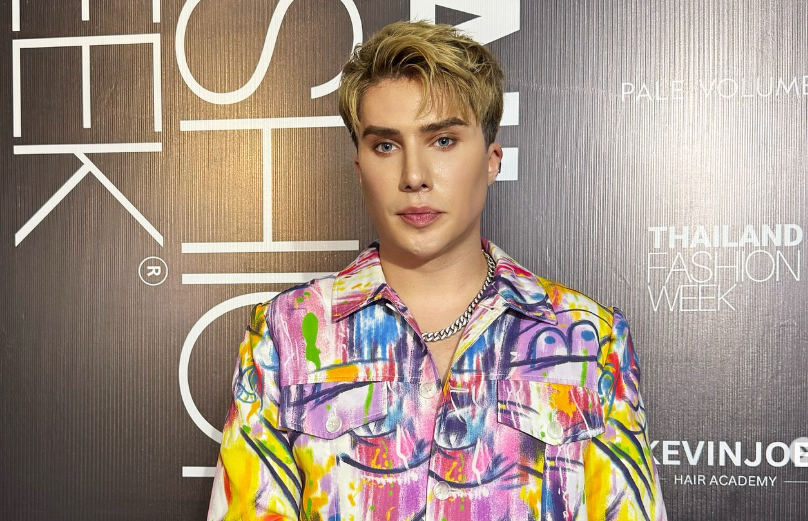
What drives a person to spend $700,000 chasing an ideal version of themselves only to undo it all a few years later?
Oli London’s story is extreme, but it’s also deeply familiar. Millions of people tweak, filter, or reshape their appearance in search of acceptance. But what happens when that pursuit spirals into 32 surgeries, a complete gender and racial identity shift, and a public reckoning with regret?
In an age where validation is often measured in likes and shares, Oli’s transformation first into a Korean woman, then back to a man raises uncomfortable questions: Where does self-expression end and self-erasure begin? When is the issue appearance, and when is it something deeper?
His journey isn’t just about surgeries or social media fame. It’s about identity, trauma, and the consequences of looking outward to fix what’s broken inside. The decisions may seem extreme, but the motivations pain, shame, and the need to be seen are not.
Let’s look at what really happened.
Where It All Began
Oli London’s story starts long before the surgeries and the headlines. Growing up in the UK, he was relentlessly bullied for his appearance his acne, his nose, and what he described as “man boobs.” The ridicule carved deep insecurities that never fully healed. “I was always very shy and insecure as a child, and when I was at school, I used to get teased and bullied for the way I looked,” he recalled. These experiences didn’t just hurt; they shaped how he saw himself, and how much he believed he needed to change to be accepted.
The tension at home only amplified his struggles. Oli has spoken openly about his complicated relationship with his father, describing him as emotionally abusive and pressuring him to be “masculine” in a way that didn’t feel authentic. His father’s rejection of his sensitive and feminine traits left Oli feeling disconnected from his own identity. “I didn’t want to look like him. I didn’t want to act like him. I wanted to be like my mother,” he said.
When Oli moved to South Korea in 2013 to teach English, his sense of self was already fragile. But that’s where he discovered the polished, flawless world of K-pop. To him, K-pop stars embodied perfection everything he believed he wasn’t. Among them, BTS member Jimin became his obsession, the physical ideal he thought could bring him happiness. For someone already craving belonging and affirmation, this fixation gave him a clear goal: transform his face and body until he matched the beauty standard he idolized.
By his early 20s, Oli had undergone his first plastic surgery. What began as one procedure to “fix” what he disliked quickly turned into a pattern. With every cut, shave, or injection, he hoped to silence the self-doubt that had haunted him since childhood. But the feeling never lasted. Instead, the surgeries became a way to cope with the deep wounds of being told by peers, family, and himself that he wasn’t good enough as he was.
Plastic Surgery as a Coping Mechanism

Oli London didn’t just pursue cosmetic surgery he became consumed by it. Over the span of 10 years, he underwent 32 procedures, spending around $700,000 in an effort to completely reconstruct his appearance. This wasn’t about a subtle nose job or a minor enhancement. Oli had his cheekbones shaved, his jaw narrowed, his chin reshaped, and his eyes operated on multiple times. He even endured surgeries that inserted 24 titanium screws and six brackets into his face to permanently alter its structure.
At the core of these drastic choices was a belief: if he could look like someone else specifically, a Korean pop idol he might finally feel whole.
After discovering K-pop in South Korea, Oli fixated on BTS’s Jimin, eventually admitting that his obsession bordered on delusional. “I wanted to look like Jimin, because he represented perfection to me,” he said. That ideal became his compass, and plastic surgery became the tool he used to chase it.
The lengths he went to were staggering. In 2018, he traveled to a clinic in Armenia where doctors agreed to perform a triple procedure: another nose job, a breast reduction, and an areola correction. The facility, according to Oli, resembled “a 1960s Soviet museum,” with outdated tools and dim corridors. But none of that mattered to him he was willing to risk his life to feel better, even temporarily. After one of these surgeries, he described being in such pain that he couldn’t move for days. At one point, a doctor reportedly cauterized his wounds with a hot metal rod, leaving him shaking in agony.
This wasn’t just a quest for beauty it was a form of self-punishment.
What he was chasing wasn’t just a new face, but a new identity one that didn’t carry the baggage of the boy who had been mocked and rejected. Every surgery gave him a brief high. “I’d feel good for a few months and that feeling would fade,” he said. When the euphoria wore off, the solution, in his mind, was simple: another surgery.
This cycle mirrors what many psychologists refer to as a behavioral addiction. Like compulsive shopping or gambling, each surgery offered a dopamine hit relief from internal pain, a rush of control, and fleeting validation. But it was never enough. The root issues low self-worth, unresolved trauma, and unmet emotional needs remained untouched.
His social media fame only intensified the addiction. Comments praising his bravery and uniqueness were quickly drowned out by vicious trolling. People called him “plastic,” “a robot,” even a “burn victim.” Instead of pulling back, Oli doubled down. “If I just do one more surgery,” he thought, “people will stop hating me.” But the surgeries didn’t stop the hate and they didn’t heal him.
Social Media, Validation, and the Echo Chamber

As Oli London’s physical transformation progressed, so did his presence online. Social media became both a stage and a mirror one that constantly reflected distorted feedback. He gained millions of followers across platforms like TikTok, Instagram, and YouTube. His videos, music, and updates about his surgeries drew clicks, comments, and controversy. But behind the viral content was someone chasing approval in a digital space that thrives on extremes.
Initially, Oli found the attention intoxicating. He received praise from fans who admired his “bravery” and dedication. But just as quickly, the criticism rolled in. Commenters mocked his appearance, accused him of cultural appropriation, and called him everything from a “clown” to “mentally unstable.” Instead of pulling away, the backlash pushed him deeper into surgery and self-alteration. “I used to get a lot of trolls… saying I was ugly or disgusting,” he recalled. “Some even said I looked like a burn victim… it led me into a spiral of depression.”
In that spiral, each negative comment reinforced the idea that he wasn’t enough not beautiful enough, not feminine enough, not Korean enough. So he tried to fix it with more surgery.
This cycle online criticism leading to more procedures, leading to more content and visibility created a dangerous feedback loop. Social media rewarded the spectacle of transformation, and punished the person behind it. The more Oli tried to fit in or be loved, the more he became a character rather than a person. That dynamic is not unique to him.
Research consistently shows that social media use is linked to increased body dissatisfaction, especially among people who already struggle with self-esteem. In one study published in Body Image, young adults who spent more time on appearance-focused platforms like Instagram reported higher rates of body shame and appearance anxiety. Platforms built to amplify attention often amplify insecurity, too.
And the echo chamber effect the phenomenon where people are exposed mostly to ideas that reinforce their existing beliefs played a role in Oli’s spiral. Supportive fans encouraged his identity shifts. Detractors fueled his need to prove them wrong. Very few voices challenged him to pause and ask the harder question: Why do I feel like I need to become someone else to feel okay?
By the time Oli came out as transgender and declared himself a Korean woman, he had 11 surgeries in a single day. That decision, like many before it, wasn’t made in quiet reflection it was shaped by algorithms, applause, and digital rage. The platforms that elevated him didn’t offer healing. They offered visibility, but not clarity. Fame, but not peace.
In hindsight, Oli recognizes how damaging that environment was. He’s spoken openly about how he used surgery as therapy, and how his online persona overtook his real identity. The line between self-expression and self-erasure became so blurred that it nearly disappeared. And in a world where likes and clicks feel like love, that’s a trap anyone could fall into.
The Turning Point Religion, Regret, and De-transitioning

Image Credits: Instagram @londonoli
By mid-2022, Oli London had exhausted nearly every avenue in his pursuit of a new identity racial, gendered, and aesthetic. He had undergone 32 surgeries. He had declared himself transracial and transgender. He had married a man in a plastic-surgery-themed ceremony. And yet, none of it brought lasting peace. After the temporary highs of each procedure wore off, what remained was the same unresolved distress.
The real shift came not in a clinic, but in a church.
Oli says it was his discovery of Christianity that forced him to stop and reassess the path he was on. After years of chasing validation through physical changes, he began asking a different question: What if I stopped changing everything about myself and tried to accept who I already am?
This was the beginning of his de-transition.
He announced he would no longer pursue cosmetic surgery. He began reversing some of the procedures where possible removing fillers, ending Botox, and returning to a more masculine appearance. He shaved his head. He started working out to build muscle. He stopped trying to resemble a Korean pop star and focused on looking like himself something he hadn’t done in over a decade.
The physical reversal came with emotional weight. Oli described his past surgeries as “damaging mutilations” that he believed would bring healing but only deepened his pain. He admitted he had reached a point where he “didn’t care if [he] died” from a procedure, as long as it made him feel beautiful for a while. That realization how easily he risked his life for external validation was sobering.
Alongside his personal transformation, Oli began speaking out publicly against what he now views as harmful encouragement of identity shifts in young people. His views sparked controversy particularly his criticism of gender-affirming care for minors but they were rooted in personal regret. “I wanted to have people love me and say, ‘You look amazing,’” he said. “Because I didn’t have that from my father. I was seeking that validation elsewhere.”
Faith gave him a new framework to make sense of his past. Rather than focusing on altering his body, he began exploring therapy, religion, and self-acceptance. “I realized I didn’t need to keep changing my identity. I just needed to be me and focus on the way that God made me,” he said. For the first time in years, he felt confident enough to go shirtless at the beach, to pose for photo shoots without a layer of cosmetic armor.
It wasn’t a clean break. There were still painful memories, ongoing surgeries to repair botched procedures, and an evolving sense of who he is. But the change in direction was clear. Oli wasn’t chasing someone else’s image anymore. He was trying finally to return to himself.
What Oli London’s Story Reveals About Identity and Mental Health

Image Credits: Instagram @londonoli
Oli London’s story may sound extreme, but the underlying themes are strikingly common: the pressure to be someone else, the longing for validation, and the belief that changing your appearance will change how you feel inside.
At the heart of his transformation was a mental health struggle that went largely unaddressed for years. Like many who turn to cosmetic surgery as a solution, Oli was chasing relief from deep-rooted emotional pain stemming from childhood bullying, parental rejection, and chronic insecurity. The surgeries weren’t about beauty. They were an attempt to rewrite a painful personal history by altering the reflection in the mirror.
This is not unique to Oli. Research has shown that people with body dysmorphic disorder (BDD) a mental health condition where individuals obsess over perceived flaws in their appearance are more likely to seek cosmetic surgery. But the irony is that surgery rarely resolves the core issue. A meta-analysis published in Plastic and Reconstructive Surgery found that people with BDD often report low satisfaction post-surgery and, in many cases, develop new fixations shortly after one area is “fixed.”
Oli’s experience follows this exact pattern. After every operation, he felt a short burst of confidence—then the old feelings crept back. Depression, anxiety, and compulsive behavior returned, often even stronger. “I would be happy for a few months,” he said, “and then go back to the same mindset again.” This cycle is a hallmark of untreated trauma and poor emotional regulation, not a physical flaw.
It’s also important to separate Oli’s case from those of most transgender individuals. While Oli later identified as transgender and de-transitioned, his path was not guided by professional gender-affirming care or sustained psychological support. His transition like his surgeries was fast, reactive, and largely self-directed, often influenced by online trends and public reaction. In contrast, gender-affirming care typically involves comprehensive evaluation, mental health support, and time not impulsive procedures.
According to data from the National Institutes of Health, regret rates for gender-affirming surgeries are low estimated at 1% or less. Oli’s highly publicized de-transition is statistically rare, but it’s also frequently used in media narratives to cast doubt on legitimate trans healthcare. His story shouldn’t be weaponized to invalidate others. It should serve as a cautionary tale about what happens when deep mental health needs are ignored or treated with surface-level fixes.
More broadly, Oli’s journey reveals the cracks in how we respond to mental distress. His cry for help was met with either ridicule or celebration but not genuine intervention. He was celebrated for being “brave” and “unique,” criticized for being “fake” or “offensive,” but rarely was he encouraged to pause and ask: What am I really trying to heal?
The answer, in his case, had little to do with gender or race and everything to do with unresolved pain. Only after turning inward through therapy, reflection, and faith did he begin the hard work of actually addressing that pain.
Protecting Mental and Emotional Health

You don’t have to spend hundreds of thousands of dollars or undergo dozens of surgeries to relate to Oli London’s struggle. Many people regardless of gender, culture, or background wrestle with self-worth, body image, or the pressure to be someone they’re not. What Oli’s journey makes clear is this: when your pain runs deep, no external change will fix what’s unresolved inside.
That’s why protecting your mental and emotional health should come before any permanent decision about your body or identity. Whether you’re considering cosmetic procedures, navigating gender dysphoria, or simply struggling with how you see yourself, here are a few grounded takeaways:
1. Start with professional support, not a surgeon.
A qualified mental health professional can help you unpack what’s really behind your discomfort. Are you reacting to trauma, peer pressure, social media comparison, or something deeper? Therapy may not offer instant transformation but it addresses the actual root, not just the symptoms.
2. Don’t rely on validation to define your identity.
Chasing approval from strangers online or offline leads to a moving target. Oli learned this the hard way. Every time he changed to please others, the goalposts shifted. Confidence rooted in other people’s opinions is unstable. The goal is to build self-worth that doesn’t depend on likes, praise, or trends.
3. Be cautious of echo chambers, especially online.
Social media often rewards extremes. It can amplify identities, choices, and aesthetics that generate clicks but don’t reflect real-life complexity. If you’re getting advice or affirmation only from like-minded spaces, you may be missing the full picture. Surround yourself with people who aren’t afraid to ask hard questions with compassion.
4. Take your time.
Feeling pressure to decide who you are right now whether about appearance, gender, or direction in life is not only unrealistic, it’s harmful. Identity isn’t fixed. It evolves. Give yourself permission to grow without locking into irreversible decisions during moments of pain or confusion.
5. Learn the difference between discomfort and distortion.
It’s normal to dislike parts of yourself. But if that discomfort becomes obsessive or begins to feel unbearable, you may be dealing with body dysmorphia or unresolved trauma. That’s not a cosmetic issue it’s a mental health one. And it deserves treatment, not surgery.
Healing Isn’t Found in the Mirror
Oli London’s journey is a cautionary tale, but not because he transitioned or had surgery. It’s because for years, he was running from himself convinced that changing his body, his gender, and even his race would finally make him feel accepted and whole. But every new procedure, every new identity, brought only fleeting relief.
It took hitting a psychological and physical wall followed by therapy, faith, and honest self-reflection for Oli to stop chasing perfection and start rebuilding his life from within. That shift didn’t come from external validation. It came from finally recognizing that the version of himself he’d tried to erase was never the real problem.
His story isn’t about sensationalism. It’s about what happens when mental health goes untreated, and identity becomes a performance instead of a process. It’s also a powerful reminder: transformation that lasts doesn’t start with a scalpel or a spotlight. It starts with doing the hard, unglamorous work of understanding your pain, your past, and your worth.
For anyone who feels lost in their body or overwhelmed by outside expectations—whether from culture, social media, or personal trauma the most radical thing you can do is pause. Get quiet. Get honest. Talk to someone. Healing isn’t found in the mirror it’s found when you stop trying to be someone else, and start learning how to live in your own skin.
Featured Image from Instagram @londonoli
