

What does heroism look like when no one is watching?
Not the kind that wears a uniform or gets a parade—but the kind that simply stays when it would be easier to run.
On September 11, 2001, nearly 3,000 people were killed in the deadliest terrorist attack on American soil. The images of collapsing towers and chaos are etched into global memory. But woven into that catastrophe are quieter stories—less told, often forgotten. One of them belongs to Godwin Ajala.
He wasn’t a firefighter. He wasn’t famous. He was a 33-year-old Nigerian immigrant working a security job at the World Trade Center, studying for the bar exam in his off-hours, and sending money home to three young children he’d hoped to reunite with in the U.S. That morning, when the towers were struck, he didn’t run. Instead, he held the door—literally—for the people behind him, ushering them through smoke and panic to safety.
Then he went back. Again and again. Until he couldn’t.
Ajala’s name doesn’t appear in most national headlines. But the lives he helped save—and the life he lived leading up to that moment—tell a story we can’t afford to ignore.
The Man Behind the Moment
Godwin Ajala didn’t arrive in America with much, but he brought everything that mattered: education, integrity, and a clear sense of purpose. Born in Nigeria in 1968, he had already established himself as a trained lawyer before deciding to leave home in 1995. Like many who immigrate under pressure, he left behind a stable profession to chase opportunity in a country where credentials don’t always translate.
He landed in New York City, where survival meant compromise. With no immediate path to practicing law, Ajala took a job as a security officer at the World Trade Center. It wasn’t the legal career he’d trained for, but it gave him a foothold. And more importantly, it gave him time—to study for the New York Bar Exam, to send money to his wife and three children back in Nigeria, to build something better, slowly.
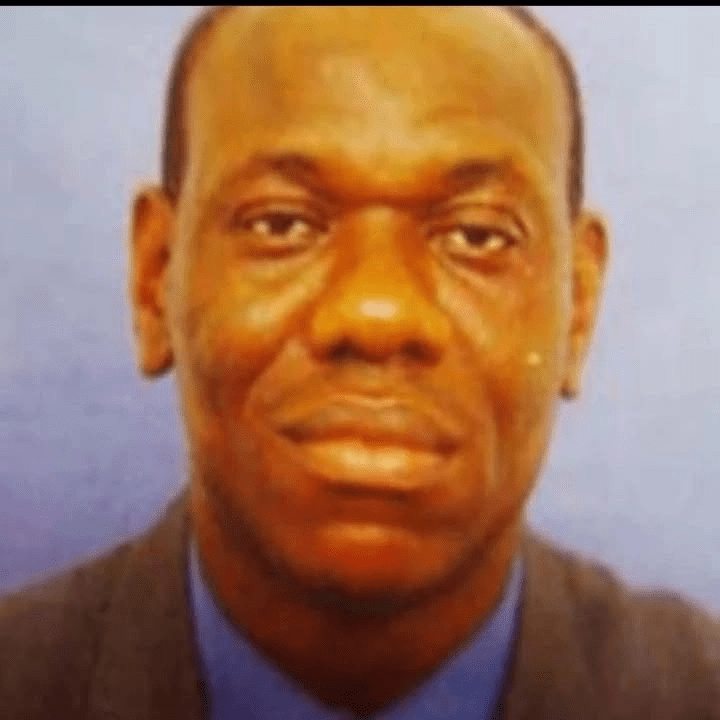
Image Credits: Instagram @MySkinColorIsNotaCrime
Friends described his routine with quiet admiration. He worked the early morning shift, often starting at 6 a.m., and then studied for hours afterward. He had already attempted the bar exam multiple times and was preparing for another shot. It wasn’t easy. He didn’t have the money for law school, so he relied on prep courses and long nights. Still, he kept going. That level of discipline wasn’t for status. It was for his family, who he planned to bring to the U.S. once he passed the exam.
Ajala’s children had never seen the streets their father walked or the job he quietly endured. But they knew what he was working toward. And so did he. He wasn’t just trying to succeed—he was trying to create a life solid enough to carry others. His dream wasn’t lofty. It was simple: reunite his family, become a practicing lawyer, and live a life of dignity in a country he chose to call home.
A Dream Deferred, Not Diminished
Godwin Ajala didn’t stop being a lawyer when he took a job as a security guard. The degree may have been earned in Nigeria, but the mindset—the discipline, the sense of responsibility, the belief in justice—never left him. What changed was the terrain. In America, his qualifications weren’t enough. Without the right paperwork, financial backing, or access to formal legal networks, he had to start from the margins.
That meant balancing survival with ambition. Ajala worked long hours at the World Trade Center, handling everything from elevator checks to minor emergencies, then came home and studied for the New York Bar Exam—often alone, often exhausted. He couldn’t afford law school in the U.S., so he enrolled in specialized prep courses instead. He failed the exam three times. Still, he kept going.
That resilience wasn’t about pride. It was about responsibility—to his wife, Victoria, and their three young children back in Nigeria. Each failed attempt was a delay, not a defeat. According to friends, 2001 was supposed to be the turning point. He was close to applying for family visas and had planned to fly his loved ones to the U.S. to finally live together. After six years of separation and relentless work, the finish line was in sight.
He never got there.
But the way he lived up to that point mattered. Ajala didn’t cut corners. He didn’t make excuses. He chose to build a future through legitimate effort, even when the system worked against him. That kind of commitment—to a dream that doesn’t guarantee a reward—is rare. It’s also a form of courage in its own right.
His legal career never got off the ground in America. But the values that led him to pursue it—justice, protection, service—would define the final moments of his life in a way no courtroom ever could.
The Morning That Changed Everything

September 11, 2001, began like any other workday for Godwin Ajala. He arrived early for his shift as a security officer at the World Trade Center’s South Tower. His job—monitoring access points, riding elevators, helping with small emergencies—was routine, predictable. Until it wasn’t.
At 8:46 a.m., American Airlines Flight 11 crashed into the North Tower. Minutes later, as confusion turned into full-blown panic, Ajala didn’t run. When United Airlines Flight 175 struck the South Tower—the very building he was working in—he moved toward the chaos. Witnesses later recalled seeing him at the ground-level concourse, holding doors open and guiding people through smoke-filled hallways and crumbling exits.
He didn’t have to stay. Nothing in his job description required it. But he did. Over and over again.
Ajala used his knowledge of the building layout to direct evacuees to safer exits. He stayed calm in a moment that overwhelmed nearly everyone else. Reports say he returned inside repeatedly to help more people escape. He knew the risks. He chose to stay anyway.
Eventually, the smoke and exhaustion caught up with him. Ajala collapsed from severe smoke inhalation. He slipped into a coma and died days later in the hospital. He never made it out of the building alive—but many others did, because of him.
The Unseen Heroism

Godwin Ajala was not a firefighter, a paramedic, or a police officer. He didn’t wear a uniform that came with public recognition. He was a Nigerian immigrant working a security job—one of many essential but easily overlooked roles that keep a place like the World Trade Center running smoothly. And yet, when the worst happened, he responded with a level of courage that matched any official first responder on the scene.
What makes Ajala’s story different isn’t just what he did, but who he was. He wasn’t someone the public was trained to view as a hero. He was an immigrant, a Black man, and a worker in a low-status job. These facts, combined with his quiet nature and lack of media presence, are part of why his name is still absent from many mainstream retellings of 9/11. But according to eyewitnesses, his actions directly saved dozens—possibly hundreds—of lives. And he did it without hesitation or fanfare.
His story confronts the way we define heroism. Too often, public memory prioritizes those already in the spotlight. Ajala’s sacrifice challenges that bias. He didn’t just show bravery in a single moment—he lived a life defined by responsibility and purpose long before disaster struck. The choice he made on 9/11 wasn’t out of character. It was consistent with how he had lived every day: showing up, doing the hard work, and carrying the weight of others without expecting anything in return.
There is also a sharper, more personal loss at the core of his story. Ajala died just as he was preparing to reunite with his family. His children—aged 7, 5, and 1 at the time—never got the chance to grow up with him. His wife never saw the future he was building for them take form. His death was not just a public tragedy; it was a private one that stole a father, husband, and provider from a family who had waited years to be whole again.
What We Can Learn From Him
Most of us will never face the kind of moment Godwin Ajala did. But the values that shaped his response—commitment, responsibility, and selflessness—are relevant far beyond the context of a national tragedy.
Ajala didn’t act out of instinct alone. He acted with intention, shaped by years of living with purpose under pressure. He didn’t need a title or an audience to do the right thing. That’s a reminder that character is built long before crisis arrives. It’s forged in daily choices—showing up to work, studying after long shifts, caring for people who aren’t looking, and doing the right thing when no one’s handing out awards for it.
His story also challenges the way we think about value. In a world that often measures worth by income, credentials, or visibility, Ajala showed that true strength isn’t always loud or visible. It lives in people who work behind the scenes, who carry responsibilities no one sees, and who act not for recognition, but out of principle.
For readers, the lesson isn’t just about bravery in extreme situations. It’s about how we carry ourselves in everyday life. Whether it’s helping someone without expecting anything in return, standing firm in a difficult moment, or simply refusing to ignore what needs to be done, Ajala’s life asks us to act with quiet integrity, even when the stakes feel small.
He also leaves a broader message about how we see others—especially immigrants, low-wage workers, and people outside the spotlight. Ajala wasn’t just an exception; he was part of a larger truth: that heroism isn’t limited by job titles or national origin. It lives in people who commit to doing the right thing, even when it costs them.
Carrying the Legacy Forward

Godwin Ajala didn’t live to see his dreams fulfilled. He didn’t get to bring his family to the U.S. He didn’t pass the bar. He didn’t become the lawyer he trained to be. But in the final hours of his life, he did something even more lasting: he chose others over himself. And that decision—made without recognition, ceremony, or reward—is the legacy he leaves behind.
His name is etched into the 9/11 Memorial in Lower Manhattan, alongside nearly 3,000 others. But unlike many, Ajala isn’t remembered for how he died—he’s remembered for what he did. He turned a job that most would consider thankless into an opportunity to serve. And when everything fell apart, he showed up with clarity and conviction. That matters.
In a world where visibility often overshadows value, Ajala’s life is a reminder that the most important contributions aren’t always the loudest. They’re often made by people no one sees—until a moment reveals the depth of their character. Remembering Ajala isn’t just about honoring one man. It’s about expanding our idea of who matters, who protects us, and who shapes the world when no one’s watching.
We carry his legacy forward not by grand gestures, but by choosing to act with the same clarity in our own lives—by showing up, speaking up, and stepping in when something needs to be done. Not because it’s easy, but because it’s right.
Ajala held the door open—literally and figuratively. It’s on us to keep it open.
