
Scientists from RIKEN and the University of Tokyo have developed a revolutionary plastic that completely dissolves in seawater within hours, leaving no harmful residue behind. Unlike conventional plastics that persist for centuries, this innovative material breaks down rapidly and transforms into nutrients that can improve soil health when disposed of in land environments.
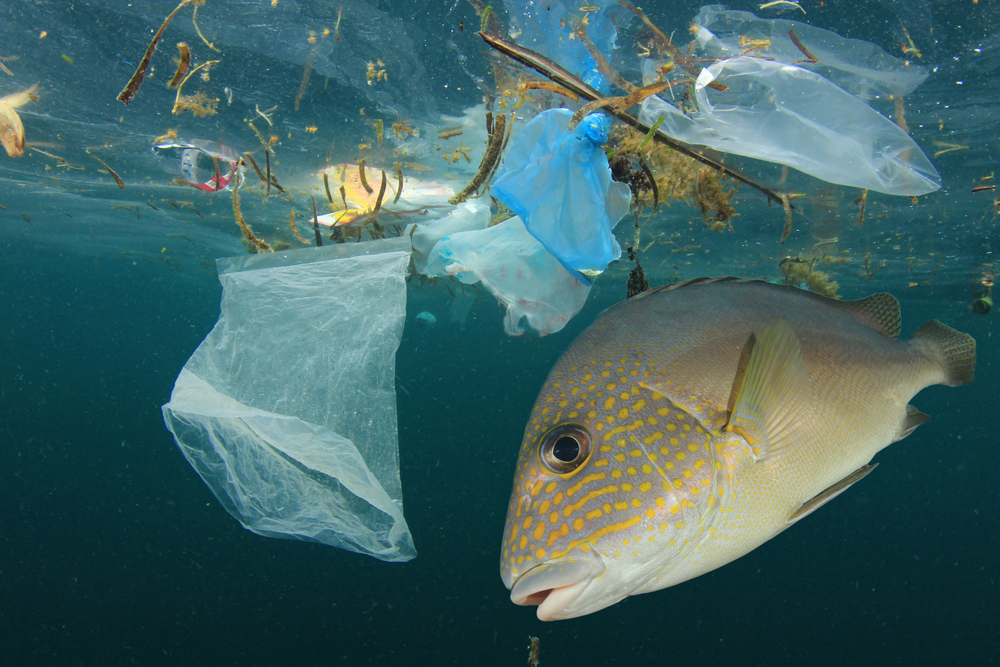
Our world faces a growing plastic crisis of staggering proportions. Most people assume their used plastic items get recycled, yet a mere 9% of all plastic worldwide completes the recycling process. Much of the remaining 91% winds up in landfills, incinerators, or, sadly, our natural environments—especially our oceans.
Japan’s new biodegradable plastic offers hope amid this crisis by addressing the fundamental problem – plastic’s stubborn resistance to natural breakdown processes. By designing a material that works effectively during use yet dissolves thoroughly afterward, researchers may have found a practical solution to one of our most pressing environmental challenges.
Plastic Crisis by Numbers
Plastic pollution is a significant environmental issue affecting our oceans and ecosystems. Here’s an overview of the current situation:Approximately 11 million metric tons of plastic waste annually enter the oceans. This is roughly equivalent to one garbage truck’s worth of plastic being dumped into the sea every minute. The Great Pacific Garbage Patch (GPGP) is the largest ocean plastic accumulation globally between Hawaii and California. It spans an estimated 1.6 million square kilometers, making it twice the size of Texas or three times that of France.

Global plastic production has risen, with over 400 million tons produced annually. Without significant policy changes, this figure is projected to increase by approximately 70% by 2040, reaching an estimated 736 million tons annually. These statistics underscore the urgency of addressing plastic pollution through comprehensive waste management strategies, reduction in single-use plastics, and global policy initiatives.
How Japan’s New Plastic Works
Revolutionary chemistry underpins Japan’s dissolving plastic innovation. RIKEN and University of Tokyo researchers developed a material using supramolecular chemistry – precisely, ionic monomers connected by reversible salt bonds. Such molecular architecture allows for strength during use and rapid degradation in saline environments like oceans.
Lead Researcher Takuzo Aida explains: “With this new material, we have created a new family of plastics that are strong, stable, recyclable, can serve multiple functions, and importantly, do not generate microplastics.”
When exposed to seawater, dissolution begins within hours – a dramatic improvement over conventional plastics that persist for decades or centuries. Salt in seawater triggers the breakdown by interfering with ionic bonds, causing complete dissolution without leaving microplastic fragments behind.
On land, decomposition occurs even faster. Tests show that soil completely breaks down within just ten days. Components release nutrients like fertilizer during soil decomposition, benefiting plant growth rather than harming ecosystems.
Manufacturing involves an innovative approach, too. Scientists mix components in water to create two distinct layers: a viscous layer containing structural elements and a watery layer rich in salt ions. A key “desalting” step during production ensures final material strength while maintaining degradability under specific conditions.
Perhaps most impressive from a sustainability perspective, 91% of primary components can be recovered after dissolution, making circular economy applications highly feasible. Such high recovery rates promise significant reductions in resource consumption compared to conventional plastic production.
Materials science experts consider salt-bond chemistry particularly promising because it mimics specific natural processes while achieving industrial-grade performance. Researchers have bridged functionality and environmental safety by harnessing naturally occurring chemical interactions in ways previous biodegradable plastics could not reach.
Real-World Applications

Japan’s new dissolving plastic offers practical benefits beyond environmental advantages. Manufacturers can mold it into various forms just like traditional thermoplastics, making adoption easier across industries.
- Food packaging revolution: Food packaging represents an obvious initial application, as these items frequently end up in marine environments. Single-use items like straws, cutlery, and take-out containers could transform from persistent pollutants into harmless, soil-enriching materials.
- Medical supplies reimagined: Medical applications might follow, with items like disposable trays, wrapping materials, and certain devices benefiting from sterile production capabilities and environmental safety after disposal.
- Consumer goods transformation: Consumer goods manufacturers face growing pressure to reduce plastic footprints. Brands could differentiate products by adopting this material while maintaining performance standards customers expect.
- Manufacturing Adaptability: Flexibility in manufacturing enables companies to create both rigid and flexible applications without overhauling existing machinery. Production lines could potentially switch to this alternative with minimal retooling costs, removing a major barrier to adoption.
Solving Microplastic Pollution

Microplastics have invaded virtually every corner of our oceans. As conventional plastics break down, they fragment into tiny particles rather than truly decomposing. Marine organisms, from plankton to whales, inadvertently consume these particles, introducing them into food chains worldwide.
Studies reveal microplastics in approximately two-thirds of all fish species. Humans who regularly consume seafood ingest these particles, raising concerns about potential health impacts that researchers are still working to understand fully.
Existing biodegradable plastics rarely effectively solve microplastic problems. Many require specific industrial composting conditions to break down and perform poorly in marine environments. Others degrade into smaller fragments that remain in ecosystems for extended periods.
Japan’s new plastic addresses these shortcomings through its complete dissolution mechanism. Instead of fragmenting into smaller pieces, it breaks down entirely at a molecular level in seawater. Materials completely disappear without leaving harmful microplastic residues behind.
Perfect Timing for a Breakthrough

Japan’s breakthrough coincides with critical Global Plastics Treaty negotiations scheduled for November 2024. Countries worldwide seek legally binding commitments to reduce plastic production, limit waste, and promote sustainable alternatives.
Norway’s Minister for International Development, Anne Beathe Tvinnereim, co-chairs a coalition of 60 countries advocating for ambitious treaty said. “We are not going to land a perfect treaty. But we need to get further. And I think we will. I choose to be hopeful,” she also stated during recent negotiations in South Korea. “With high-ambition coalition countries, we will continue to demonstrate that there is a big group of countries that sticks to its ambitions. The world desperately needs some leadership now, and some good news.”,” Major corporations recognize regulatory changes on the horizon. Even Unilever, ranked as the world’s third-largest plastic polluter, supports global regulations. CEO Hein Schumacher plainly states: “Business needs global rules.”
Materials science experts view this technology favorably. Joaquín Martínez Urreaga from Madrid’s Polytechnic University described it as “a promising alternative to tackle marine pollution.” Such endorsements may accelerate acceptance among skeptical industries.
Bringing Dissolving Plastic Worldwide

Scaling production represents an immediate challenge for widespread adoption. Laboratory success must translate to industrial-scale manufacturing while maintaining consistent performance and environmental benefits.
Collection and processing systems would need modifications to handle these new materials effectively. Recycling facilities might require new processes to recover components from dissolved products, though potentially simpler than current plastic recycling.
Manufacturing expenses may initially exceed conventional plastics until economies of scale develop. During transition periods, companies and consumers must determine acceptable price premiums for environmental benefits.
Governments worldwide must develop appropriate certification standards and regulatory frameworks. Clear guidelines prevent misleading claims and ensure products perform as promised in real-world conditions.
Despite challenges, Japan’s innovation offers genuine hope in addressing plastic pollution. As treaty negotiations progress and consumer demand for sustainable options grows, dissolving plastics could become mainstream within years rather than decades.
A Cleaner Future for Our Oceans

Marine environments face unprecedented challenges from plastic waste accumulation. Japan’s dissolving plastic offers hope amid increasingly dire predictions for ocean health. By addressing the fundamental non-biodegradability problem, scientists have found a path forward. Current efforts focus primarily on removing existing plastic from oceans—a necessary but insufficient approach. Prevention through materials innovation provides a more sustainable long-term strategy. Each product that dissolves plastic represents one less potential piece of debris threatening marine life.
RIKEN and University of Tokyo researchers have demonstrated what’s possible when science focuses on environmental solutions. Their work opens doors for further innovations in sustainable materials that maintain functionality without ecological costs. Moving beyond awareness to action requires a collaborative effort. Scientists continue refining formulations while manufacturers explore production methods. Meanwhile, consumers and policymakers can create demand and supportive regulations for responsible alternatives.
Source:
- Bye-bye microplastics: new plastic is recyclable and fully ocean-degradable. (n.d.). RIKEN. https://www.riken.jp/en/news_pubs/research_news/pr/2024/20241122_1/index.html
