
For over 500 years, bulls have died in front of cheering crowds at the heart of Mexico City. Not anymore.
In a sweeping 61-to-1 vote, lawmakers have outlawed the violence at the core of this tradition—ending an era where death was part of the performance. It’s a shift as symbolic as it is legislative, confronting a cultural legacy that has long walked the line between ritual and brutality.
But what happens when a society decides that spectacle no longer justifies suffering? Can tradition evolve without losing its meaning—or does it collapse under the weight of change?
What Just Happened
In March 2025, Mexico City lawmakers passed a near-unanimous bill that bans traditional bullfighting — the kind where bulls are injured or killed as part of the event. The final vote came in at 61–1, marking a decisive end to a practice that has defined public entertainment in the capital for centuries. While this doesn’t eliminate bullfighting completely, it fundamentally changes what the spectacle can be.
Under the new law, matadors are no longer allowed to use swords, spears, or any object that causes physical harm to the bull. The use of only capes is permitted, and bulls must not be killed or even injured. New rules also limit the duration of each performance: no more than 15 minutes per bull, and only six bulls per event. Violating these guidelines could lead to criminal charges under Mexico’s animal cruelty laws.
The law isn’t just about banning a violent sport—it’s a cultural reset. Mexico City, home to La Plaza México, the world’s largest bullfighting arena, has been a global hub for the tradition. The city’s decision effectively signals to the rest of the country—and the world—that times have changed.
Support for the ban has been building for years, driven by both public opinion and legal challenges. In 2022, a judge temporarily suspended bullfights in Mexico City, citing the public’s right to a “healthy, violence-free environment.” That decision was overturned by the Supreme Court in 2023, allowing bullfights to resume briefly—until this final legislative push shut them down again, this time with stronger legal footing.
Mayor Clara Brugada and President Claudia Sheinbaum both endorsed the move. Their message: this is not an attack on tradition, but an evolution of it. The law also includes a 210-day transition period, during which city officials will work with industry stakeholders to define exactly how “bullfighting without violence” will look going forward.
From Spectacle to Ethics
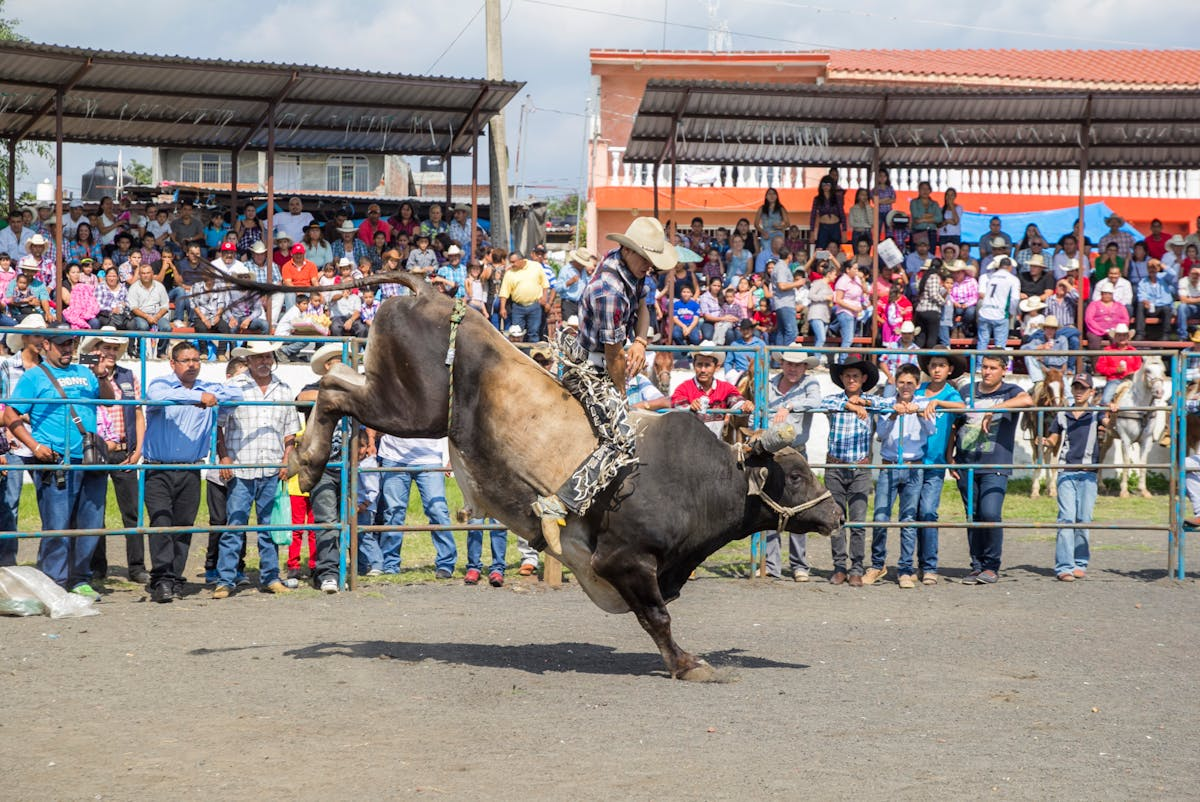
For generations, bullfighting was defended as art, ritual, and national pride. But beneath the choreography and ceremony is a simple reality: bulls suffer and die for entertainment. That reality has become harder to ignore—and harder to justify.
Animal rights advocates have spent years pushing back against the idea that tradition excuses cruelty. According to data from Mexico City’s legislature, 168 bulls were killed at La Plaza México in 2019 alone. Globally, an estimated 180,000 bulls die each year in bullfighting arenas. Critics argue that no cultural legacy, however old, should shield a practice that depends on bloodshed.
Public opinion in Mexico has shifted, especially among younger generations. A 2022 national survey by Parametría found that over 70% of Mexicans oppose bullfighting. For many, it no longer represents heritage—it represents a disconnect between modern values and historical habits.
The ethical argument isn’t just about the moment of death in the ring. It’s about the entire system: bulls bred for aggression, raised in isolation, and subjected to extreme stress from travel, noise, and the arena environment. Even in so-called “bloodless” versions of the event, animal welfare groups warn that psychological distress still occurs.
Organizations like AnimaNaturalis, Animal Heroes, and México Sin Toreo have led protests, filed lawsuits, and launched public awareness campaigns. Their core message is consistent: cultural practices must evolve when they rely on suffering. As activist Luisa Ramírez put it, “We’re finally seeing empathy reflected in law.”
Legislators echoed this sentiment. Jorge Gaviño, one of the co-authors of the ban, stated plainly during the vote: “This is not a decision against tradition, but a step toward becoming a more ethical society.”
The momentum behind the ban wasn’t accidental—it was built over years by public pressure, court rulings, and a broader reevaluation of how animals are treated in the name of culture. What was once a proud spectacle is now under ethical scrutiny, and Mexico City has made its position clear: compassion has a place in policy.
What ‘Violence-Free Bullfighting’ Actually Looks Like

The term “violence-free bullfighting” might sound like a contradiction—but it’s now the legal reality in Mexico City. Under the new rules, bullfighting events can continue, but only in forms that do not harm or kill the animals. This shift redefines what the spectacle is about: not dominance, but display.
Here’s what’s changing. Matadors are now limited to using only traditional capes—both the large magenta cape (capote) and the smaller red one (muleta). No swords, spears, or banderillas are allowed. Bulls can only be in the ring for 15 minutes at a time, and each event is capped at six such performances. The bulls must return to their ranches afterward, unharmed.
In some countries that already practice bloodless bullfighting—like Portugal and parts of the U.S.—other modifications have been used. Some events replace real weapons with Velcro-tipped spears that attach harmlessly to padded targets on the bull. In Mexico City, the exact technical standards are still being finalized, but the guiding principle is clear: no pain, no death.
There’s also talk of introducing more symbolic or theatrical versions. One proposed idea includes choreographed duels between matadors and mechanical bulls. Another involves ritual-style performances that showcase skill without using live animals at all.
The goal is to preserve the spectacle’s rhythm and aesthetics without the suffering. Supporters argue this could broaden the appeal of bullfighting—turning it into something more inclusive, family-friendly, and internationally palatable. Critics, however, worry that removing the “danger” and fatal climax turns the event into a hollow imitation.
But for lawmakers and animal welfare advocates, the priority isn’t authenticity—it’s ethics. By removing violence, Mexico City isn’t erasing the art form; it’s testing whether that art can stand on its own without blood.
Culture vs. Compassion — Divided Reactions
Outside the legislative chambers in Mexico City, bullfighting supporters gathered in protest the day of the vote, waving signs that read, “Being a fan of la fiesta brava is not a crime.” Some tried to breach police barricades. Their message was clear: this isn’t just about animals—it’s about national pride, personal livelihood, and cultural survival.
La Plaza México, the largest bullfighting arena in the world, called the new law a direct threat to one of Mexico’s most “deeply rooted cultural traditions.” Prominent matadors and industry advocates have criticized the shift as a hollow compromise, claiming that without the mortal challenge at the center of the performance, bullfighting loses its essence.
The economic concerns are also real. According to the National Association of Breeders of Fighting Bulls, the bullfighting industry supports around 80,000 direct jobs and 146,000 indirect ones, contributing roughly $400 million annually. These include breeders, event staff, artisans, food vendors, and musicians—many of whom rely on bullfighting events for their income.
Still, lawmakers insist that the new model doesn’t mean economic ruin. “No one lost their job,” said Green Party legislator Jesús Sesma. “We found a way to continue these spectacles without violence.” The idea is to transition the industry toward cruelty-free formats that can still generate revenue, while aligning with modern public values.
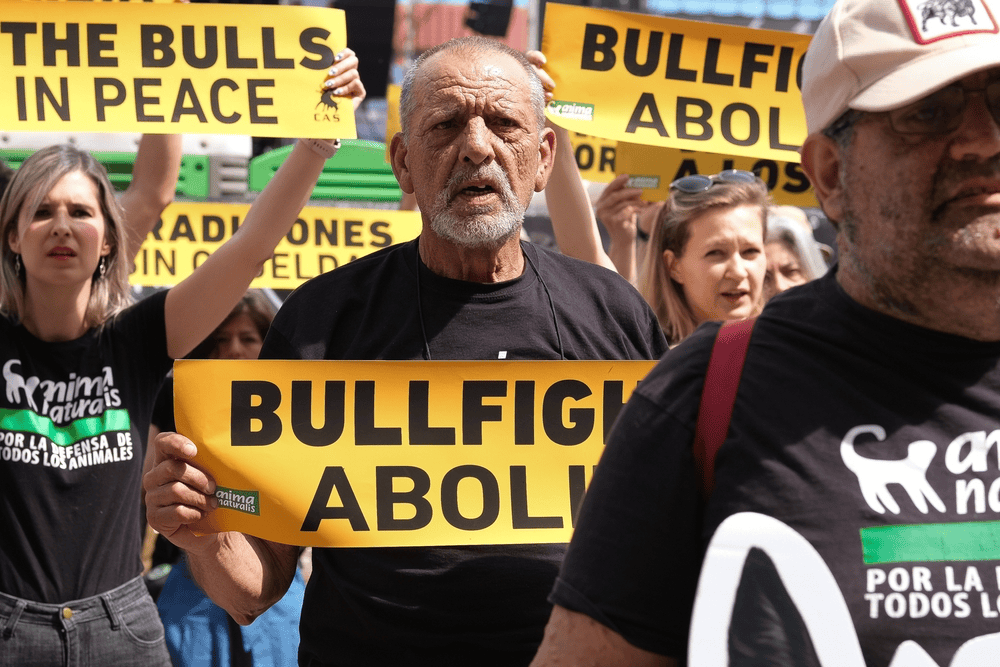
Animal rights groups, meanwhile, are calling it a long-overdue step. Outside Congress, activists held stuffed bull dolls and celebrated the legislation as a landmark shift toward empathy and reform. “It was either this or nothing,” said Sofía Morín of Culture Without Torture. “We prefer this because, without a doubt, it’s a huge step in protecting animals.”
Legal challenges are already in motion. Some bullfighting associations plan to fight the law in court, and there are concerns that underground events could emerge if demand for traditional bullfighting persists.
What This Means for the Future of Bullfighting

Mexico City’s ban doesn’t just change the rules inside one arena—it sets a precedent that could ripple far beyond its borders. This move sends a message that tradition isn’t immune to ethical scrutiny, and that even the most deeply rooted practices can be reexamined.
Other bullfighting strongholds are paying attention. Countries like Spain, Colombia, Ecuador, and Peru still permit traditional bullfights, though debates over reform are gaining ground. Colombia, for instance, has already passed legislation to ban bullfighting starting in 2027. Portugal allows it, but with limits—bulls aren’t killed in the ring, though they may be euthanized afterward. Now, with one of the most iconic bullfighting cities taking a definitive stance, pressure is mounting on others to follow suit.
For general readers, this moment matters because it highlights a broader cultural shift: the growing expectation that entertainment and tradition must align with humane values. It’s a reminder that societal norms are not fixed—they evolve as public awareness and ethical standards change.
There’s also a personal angle. Whether it’s bullfighting, circuses, or other animal-based attractions, consumers are being forced to ask: What do we support when we buy a ticket? As cruelty becomes harder to ignore, so does our role in sustaining—or ending—it.
The transition in Mexico City shows that reform is possible without complete erasure. Lawmakers didn’t shut down the industry—they challenged it to adapt. If successful, this model could offer a roadmap for balancing heritage with responsibility.
How to Support Change Without Losing Culture

Cultural change doesn’t have to mean cultural loss. Mexico City’s bullfighting reform is proof that tradition can be reimagined—not erased—when it no longer aligns with modern values. For individuals who care about ethical progress but also respect heritage, the question becomes: how do you support reform without alienating culture? Here are a few grounded, practical ways to engage:
1. Be a Conscious Consumer of Culture
Before attending festivals, performances, or animal-based events—whether in your own city or while traveling—look into what you’re supporting. Is the event rooted in exploitation, or has it adapted to modern standards? Choose experiences that preserve cultural identity without causing harm.
2. Support Ethical Alternatives
Many communities are transitioning away from outdated practices. Whether it’s bloodless bullfighting, humane rodeos, or modernized rituals, these alternatives need public interest to survive. Buying tickets, sharing stories, and showing up for cruelty-free events helps prove that change can be sustainable.
3. Listen to Local Voices—All of Them
Cultural shifts affect real people: performers, vendors, artisans, and families. Rather than dismissing their concerns, understand them. Support programs and policies that offer economic alternatives or retraining. Reform works best when it includes—not overrides—communities.
4. Learn the History Without Romanticizing Harm
Appreciating cultural history doesn’t mean defending every part of it. Take time to learn the origins of a tradition—what it meant, who it served, and how it’s evolved. You can value a culture’s depth without excusing practices that cause suffering.
5. Use Your Platform, Even If It’s Small
Whether you’re sharing articles, posting on social media, or just having honest conversations, use your voice to advocate for ethical reforms. Highlight efforts like Mexico City’s that find middle ground. Small awareness builds larger momentum.
A Cultural Shift Worth Paying Attention To
Mexico City’s decision to ban violent bullfighting marks more than the end of a centuries-old ritual—it marks a turning point in how we define tradition in a changing world. It’s a reminder that cultural heritage isn’t static. It evolves as our understanding of ethics, empathy, and justice deepens.
What makes this shift so significant is that it wasn’t driven by outside pressure alone. It came from within—a response to citizens, lawmakers, and activists who decided that honoring history doesn’t have to mean repeating its harms. It’s a message with global relevance: meaningful reform doesn’t require erasing identity, but rethinking how it’s expressed.
This isn’t just about bulls. It’s about how societies choose to grow. The fact that a city known as the global epicenter of bullfighting chose to rewrite its own rules shows that even the most ingrained traditions are not immune to change.
And that’s worth paying attention to—not just as a political headline or cultural curiosity, but as a real example of how values can shift when enough people decide they should.
