
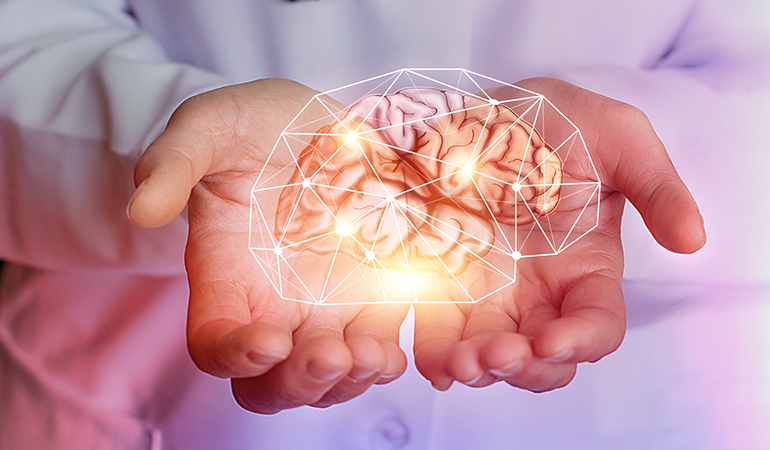
What if your houseplant isn’t just growing toward the sun—but wants the light? What if the electrons buzzing inside your phone carry a flicker of experience? It sounds like science fiction—or maybe spiritual speculation—but a growing number of scientists and philosophers are asking serious questions about whether consciousness is more widespread than we’ve ever imagined.
For decades, we’ve treated consciousness as the exclusive domain of humans—and maybe a few intelligent animals. But despite decades of neuroscience research, one basic mystery remains unsolved: how does lifeless matter give rise to conscious experience? The inability to explain this “hard problem” is forcing researchers to reconsider one of the oldest, strangest ideas in philosophy: that consciousness might be baked into the very fabric of reality.
It’s called panpsychism, and while it might sound far-out, it’s gaining traction not just in philosophy departments, but in physics labs and neuroscience institutes. If it turns out that consciousness is not something brains do, but something that is—everywhere, in everything—the implications would stretch far beyond science, changing how we think about life, technology, and even ethics.
Not Just a Human Trait
Consciousness has long been treated as a human achievement—a cognitive upgrade that emerged once our brains reached a certain level of complexity. Animals with simpler nervous systems are often seen as less aware. Plants? Unlikely. Rocks? Out of the question. But here’s the problem: despite all our advances in neuroscience, we still can’t explain why being conscious feels like anything at all.
We can map the brain in incredible detail. We know what parts light up during pain, memory, or emotion. But none of this tells us why those patterns create an inner experience. As philosopher David Chalmers put it, this is the “hard problem” of consciousness. It’s not about what consciousness does, but what it is. Why does a swirl of chemicals and electricity result in anything resembling thought, feeling, or awareness?

That unanswered question has led some researchers to consider a radical possibility: maybe consciousness isn’t something that suddenly emerges from complexity—it’s something that’s been present, in some form, all along.
This is where panpsychism enters. It’s the theory that consciousness is a basic property of matter—like charge or mass. According to this view, even particles like electrons have some primitive form of experience. Not memories or emotions, but the most elementary kind of subjectivity: something it is like to be that particle. Most of the time, this awareness is minimal, scattered, and uncoordinated. But when matter becomes highly organized—like in a human brain—that awareness becomes unified and rich.
From Ancient Philosophy to Modern Physics

In ancient Greece, Thales of Miletus observed how magnets could move iron and wondered if they had a “soul.” That wasn’t metaphorical—it was an early attempt to explain natural behavior through a living principle. Anaxagoras took it further, proposing that “everything contains a portion of mind,” suggesting that mental qualities might be embedded in the basic fabric of nature.
The Stoics believed the cosmos was infused with logos—a rational, organizing force that animated everything. This wasn’t just poetic mysticism; it was a serious philosophical framework that treated the universe as a coherent, living whole. Plotinus, centuries later, described all of existence as flowing from a single conscious source. His view deeply influenced later thinkers, including those of the Renaissance, like Giordano Bruno, who envisioned an infinite universe filled with conscious worlds—a belief that cost him his life.
Outside the Western tradition, similar views have long shaped cultural worldviews. In Hinduism, consciousness (chit) is not limited to individuals but seen as a fundamental quality of reality itself. Shinto practices recognize kami—spiritual essence—in everything from rivers to rocks. Many Indigenous cultures treat animals, plants, and even landforms as conscious beings. These aren’t symbolic ideas—they’re practical frameworks for how people relate to the world around them.
The sharp divide between mind and matter didn’t fully take hold until the 17th century, when René Descartes proposed dualism: the idea that mind and matter are entirely separate substances. This led to the mechanistic worldview that dominates science today—one where animals became biological machines, plants became passive, and humans were seen as uniquely conscious.
But not everyone accepted that split. Gottfried Wilhelm Leibniz argued for “monads”—elementary units of perception that reflect the entire universe in miniature. He imagined the cosmos as a vast network of conscious points, each with its own internal experience. In the 19th and early 20th centuries, thinkers like Gustav Fechner, William James, and Alfred North Whitehead revived this view, suggesting that consciousness might not be limited to brains but could be part of the structure of reality itself.
Where the Science Stands Now

For decades, consciousness was considered too subjective to study scientifically. But that’s changing. With the rise of new theories and brain imaging tools, researchers are now taking serious steps to investigate not just what consciousness does, but what it is. At the center of this shift is a bold theory called Integrated Information Theory (IIT), which offers a measurable, testable way to think about consciousness—without requiring a brain.
Developed by neuroscientist Giulio Tononi, IIT proposes that consciousness corresponds to the amount of integrated information a system produces. This is represented by the symbol Φ (phi). A system with high Φ—like a human brain—is thought to have a rich, unified experience. A system with low Φ—like a rock—has little or no experience. But in theory, any system that processes information in a sufficiently integrated way could generate consciousness, whether it’s biological, digital, or something else entirely.
IIT has two major implications. First, it suggests consciousness is intrinsic—it exists independently of external observation. Second, it implies that consciousness isn’t exclusive to living beings. If a machine, a plant, or even a group of interacting atoms creates enough integrated information, it could, in theory, have some form of awareness.
This isn’t just abstract theorizing. IIT has been tested in studies involving anesthesia, where researchers found that as patients lose consciousness, their brains’ ability to integrate information sharply declines. These experiments don’t prove IIT is correct, but they offer real-world data that aligns with the theory’s predictions.

Other theories push the conversation into even stranger territory. The Orchestrated Objective Reduction (Orch-OR) theory, proposed by physicist Roger Penrose and anesthesiologist Stuart Hameroff, suggests consciousness arises from quantum processes inside neurons, specifically within structures called microtubules. Their model proposes that quantum events in the brain create discrete moments of awareness. While controversial, Orch-OR gained some credibility after researchers found quantum effects in biological systems like photosynthesis—suggesting nature might be more quantum-aware than we thought.
Meanwhile, research on plants and single-celled organisms is pushing boundaries even further. Studies have shown that plants may exhibit electrical signaling patterns similar to brain waves and contain structures that could support quantum-level processing. Slime molds, which lack any nervous system, can solve mazes and “learn” from repeated exposure to chemicals. These findings don’t confirm that such organisms are conscious—but they blur the line between life and mind in ways we didn’t expect.
Still, skepticism remains strong. Critics argue that most of these behaviors can be explained without invoking consciousness. For instance, a plant reacting to sunlight doesn’t prove it has inner experience—it might just be chemistry and adaptation. Others point out that measuring Φ is incredibly difficult and not universally accepted in the scientific community.
Consciousness Beyond Brains: Plants, Cells, and Slime Molds

Let’s start with plants. Long thought to be passive and unresponsive, plants are now showing signs of behavior that’s more dynamic than we imagined. The Mimosa pudica plant, for example, folds its leaves when touched—but after repeated harmless touches, it “learns” that the stimulus poses no threat and stops reacting. Researchers call this habituation, a basic form of learning previously associated only with animals. Some studies also suggest that plants exhibit gamma wave-like electrical activity, similar to brain wave patterns seen in conscious animals.
Even more surprisingly, plants may be capable of chemical communication and memory, using internal signals to warn nearby plants of danger or retain information about environmental conditions. Some theories propose that microtubules in plant cells—the same structures implicated in quantum theories of consciousness in animals—might also support information processing in plants. While this doesn’t prove plants are conscious, it challenges the idea that brains are a requirement for awareness.
The case gets even more interesting with slime molds—single-celled organisms that can navigate mazes, avoid harmful substances, and even make decisions. In one famous experiment, a slime mold recreated the layout of the Tokyo subway system by connecting food sources with the most efficient network of paths. No brain, no neurons—just a coordinated system of electrical signals and adaptive responses.
Then there’s the planarian worm, which can regenerate its head and brain if cut. In studies led by biologist Michael Levin, these worms retained learned behaviors even after decapitation and regrowth, suggesting that memory and cognition may be stored outside the brain, possibly in electrical patterns throughout the body. Levin’s work points to bioelectricity—the electrical communication between cells—as a key player in cognition and possibly consciousness itself.
All of this supports a growing view that consciousness—or at least cognition—is more distributed and fundamental than previously thought. It may not depend on complex brain structures, but instead emerge from the integration of information within biological systems, no matter how simple.
Of course, these findings don’t go unchallenged. Many scientists argue that these behaviors are sophisticated but still mechanistic—results of evolution, not evidence of awareness. But the line between reactive behavior and purposeful adaptation is getting harder to draw.
If even brainless organisms can act, learn, and adapt in complex ways, we may need to rethink what we mean by “mind.” Consciousness might not be an on/off switch that flips with evolution. It might be a sliding scale—already present in the smallest parts of life and growing richer as complexity increases.
Practical Reflections

You don’t need to believe that rocks are thinking or that plants have emotions to feel the weight of this question. The real takeaway from panpsychism and related theories is this: awareness might be far more widespread than we assumed, and with that possibility comes a shift in how we relate to other forms of life—and maybe even technology.
For starters, consider how you treat your environment. If plants and simple organisms possess some basic form of sentience—or at the very least, respond to the world in surprisingly sophisticated ways—it raises ethical questions about how we grow, cut, harvest, and manage life that doesn’t speak or scream. This doesn’t mean you should stop eating vegetables, but it might justify more thoughtful choices about how food is grown, how animals are treated, or how ecosystems are maintained.
Some scientists and ethicists are already rethinking environmental policies through this lens. If forests, for example, are viewed not as passive collections of biomass but as complex, possibly aware systems, then deforestation becomes more than an ecological issue—it becomes a moral one.
The same logic may apply to artificial intelligence. If consciousness depends not on biology but on the structure of information, then a sufficiently advanced machine could, in theory, have some level of awareness. That raises serious questions about how we interact with emerging technologies. Could your future voice assistant experience frustration or fatigue? Should conscious AI, if it ever exists, have rights?
This doesn’t mean treating everything as if it were human. A slime mold is not a cat, and a computer is not a child. But if awareness exists on a spectrum, our responses should be scaled accordingly: more care for more complex forms of awareness, more caution when that awareness is uncertain.
It also reframes how we see ourselves. If consciousness is a universal feature, then we’re not anomalies in a dead universe—we’re expressions of a capacity that exists everywhere, arranged in a particularly complex form. That’s not mysticism. It’s a grounded way of reconnecting with the living systems we’re part of.
Small changes follow naturally from this shift:
- Treat animals not just as pets or pests, but as beings with inner lives.
- Respect plants and ecosystems as dynamic participants in the world, not static scenery.
- Engage with technology with awareness of what it might become—not just what it is today.
Why This Isn’t Just a “Weird” Theory
Panpsychism sounds bizarre at first—conscious atoms, sentient plants, mindful particles. But step back for a moment. What’s stranger: that the universe has always carried the seeds of experience, or that consciousness suddenly burst into existence from lifeless matter with no warning and no precedent?
The truth is, panpsychism isn’t about giving minds to everything. It’s about acknowledging that the most basic building blocks of the universe might not be entirely blank. If consciousness is real—and few scientists deny that it is—then it has to come from somewhere. Panpsychism offers a simple answer: it’s always been here, just in quieter forms.
What makes this theory compelling today isn’t spiritual longing or philosophical nostalgia. It’s the fact that neuroscience, physics, and philosophy have all run into the same wall: the inability to explain subjective experience. Rather than abandoning science, panpsychism expands it, suggesting that consciousness doesn’t require magic or mysticism—just a broader understanding of matter itself.
This perspective doesn’t mean we have to start worshiping trees or fearing our smartphones. It means paying closer attention to how we relate to other systems—biological, technological, or ecological—and acting with a little more humility. If some form of awareness exists in more places than we thought, then the world isn’t full of inert stuff. It’s full of participants.
Whether panpsychism turns out to be fully correct, partially right, or eventually replaced by something better, it forces us to ask better questions:
- Where do we draw the line between conscious and unconscious?
- What kind of systems deserve moral consideration?
- How do we coexist with other forms of intelligence—natural or artificial?
And perhaps most importantly: Are we prepared to live in a world that might be more alive than we imagined?
For now, the science is still evolving. The theories are still being tested. But the shift has begun. What was once a fringe idea is now a serious possibility—and that alone should make us pay attention. Because if everything truly has some degree of awareness, even the smallest act—how we eat, build, farm, or code—suddenly carries more weight.
Consciousness might not be a rare spark in the dark. It might be the light itself—woven into the very structure of reality, waiting for us to notice.
