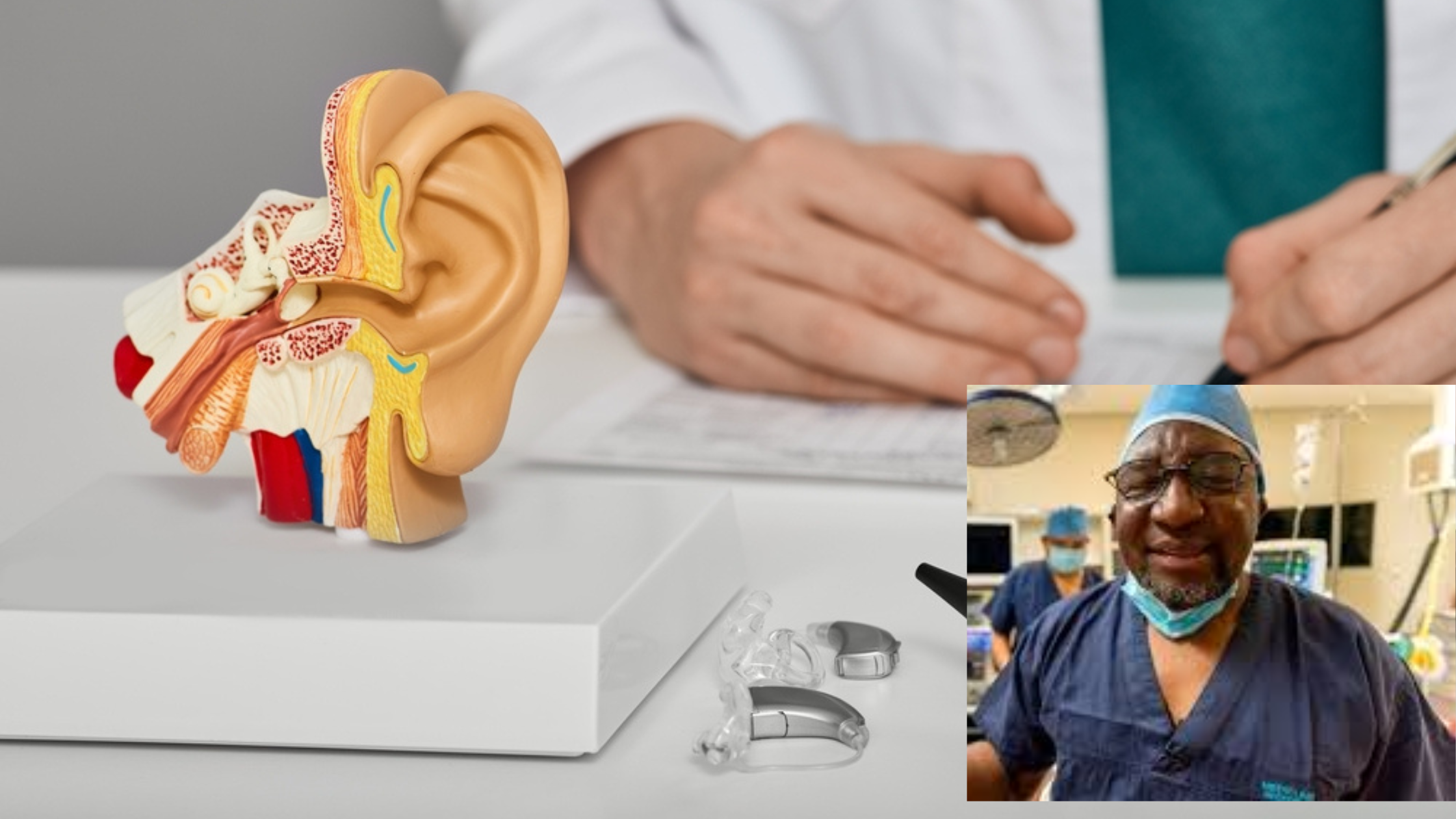
Imagine a world where hearing loss, one of humanity’s most pervasive disabilities, could be reversed with precision and ease. For years, this seemed like a distant dream—until one groundbreaking moment changed everything. In a small operating room in South Africa, a visionary surgeon wielded cutting-edge technology to make medical history. With a procedure that combined science, innovation, and hope, he paved the way for a future where silence could be broken forever. Curious about how one man’s determination reshaped the possibilities of medicine?
The Historic Surgery: A Leap Forward in Medical Innovation
In March 2019, Professor Mashudu Tshifularo and his team at the University of Pretoria achieved a groundbreaking milestone in medical science by performing the world’s first middle ear transplant using 3D-printed bones.
The procedure involved replacing the ossicles—the tiny bones in the middle ear responsible for sound transmission—with 3D-printed replicas. This innovative approach aimed to treat conductive hearing loss, which is often caused by congenital birth defects, infections, trauma, or metabolic diseases.
The surgery was performed on a 40-year-old patient who had suffered middle ear damage due to an injury. Using 3D scanning technology, the team created precise replicas of the patient’s ossicles, which were then printed using biocompatible titanium material. The operation was conducted endoscopically, making it minimally invasive, and was completed in approximately two hours.
Professor Tshifularo expressed his excitement about the success of the procedure, stating, “The operation went fantastically well, and we are very excited.”
This pioneering surgery not only restored the patient’s hearing but also demonstrated the potential of 3D printing technology in medical applications, offering a new avenue for treating hearing loss and other conditions requiring precise anatomical reconstruction.
Studies have shown that 3D-printed prosthetic implants can improve treatment outcomes for hearing loss by providing custom-designed replacements for damaged parts of the middle ear.

Image Credits: Twitter @Mfundoyakhe_S
How 3D Printing is Revolutionizing Medicine
In this groundbreaking procedure, the ossicles—the tiny bones responsible for sound transmission in the middle ear—are replaced with 3D-printed replicas tailored to the patient’s unique anatomy. This method not only restores hearing but also reduces the risks associated with traditional prostheses. As Professor Tshifularo explains, “By replacing only the ossicles that aren’t functioning properly, the procedure carries significantly less risk than known prostheses and their associated surgical procedures.”
Beyond otology, 3D printing is making significant strides across various medical fields:
- Customized Implants and Prosthetics: 3D printing allows for the creation of patient-specific implants and prosthetics, enhancing compatibility and comfort. For instance, customized mandibular implants have been developed for patients with severe jaw deformities, offering improved outcomes over traditional methods.
- Surgical Planning and Education: Detailed anatomical models produced through 3D printing assist surgeons in preoperative planning and serve as educational tools, improving surgical outcomes and training efficiency.
- Tissue Engineering and Regenerative Medicine: Researchers are exploring 3D bioprinting to create scaffolds that promote tissue regeneration, with the potential to develop functional organs for transplantation in the future.
Studies have demonstrated the clinical efficacy of 3D-printed medical devices. A review in BMJ Open highlights that, while many applications are in the developmental stage, there is a growing body of evidence supporting their effectiveness in clinical settings.
Professor Tshifularo’s Vision: Merging Innovation with Accessibility
Professor Mashudu Tshifularo’s groundbreaking work in 3D-printed middle ear transplants is deeply rooted in his commitment to making advanced medical treatments accessible to all, particularly within public healthcare systems. As the head of the Department of Otorhinolaryngology at the University of Pretoria, he emphasizes the transformative potential of technology in medicine, stating, “3D technology is allowing us to do things we never thought we could.”
His vision extends beyond individual surgeries; he aims to integrate these innovative procedures into standard medical practice, ensuring that patients from diverse backgrounds can benefit. In a 2019 interview, Professor Tshifularo highlighted the importance of technological advancements in the Fourth Industrial Revolution (4IR) for medical progress.
To realize this vision, Professor Tshifularo is actively involved in training healthcare professionals and collaborating with policymakers to incorporate 3D printing technologies into mainstream medical services. His dedication to merging cutting-edge innovation with practical application underscores a future where high-quality healthcare is universally accessible, embodying his belief that “people like me never arrive; after climbing one mountain, we want to climb another one.”
A New Era in Hearing Loss Treatment

Professor Mashudu Tshifularo’s pioneering use of 3D-printed middle ear implants has set a precedent with far-reaching global implications. By successfully replacing the ossicles—the tiny bones essential for hearing—with custom-made, biocompatible implants, he has introduced a method that could revolutionize the treatment of conductive hearing loss worldwide.
This innovative approach offers several advantages over traditional methods:
- Accessibility: The ability to produce patient-specific implants using 3D printing can make advanced hearing restoration techniques more accessible, especially in regions with limited access to specialized medical devices.
- Affordability: 3D printing technology has the potential to reduce costs associated with prosthetic production, making treatments more affordable for a broader population.
- Customization: Tailoring implants to the exact specifications of a patient’s anatomy enhances the effectiveness of the treatment and reduces the risk of complications.
The global burden of hearing loss is significant, with the World Health Organization estimating that over 5% of the world’s population—approximately 430 million people—require rehabilitation to address their ‘disabling’ hearing loss. Innovations like Professor Tshifularo’s procedure could play a crucial role in mitigating this public health challenge.
Furthermore, this breakthrough exemplifies the potential of integrating advanced technologies into medical practice, encouraging healthcare systems worldwide to invest in and adopt similar innovations. As Professor Tshifularo aptly puts it, “3D technology is allowing us to do things we never thought we could.”
Transforming Hearing Restoration with 3D-Printed Implants
Professor Mashudu Tshifularo’s innovative use of 3D-printed middle ear implants offers numerous advantages over traditional methods in treating conductive hearing loss.
Here are the key benefits:
- Enhanced Precision and Customization: 3D printing enables the creation of implants tailored to the exact dimensions of a patient’s middle ear anatomy, ensuring a perfect fit and improved functionality. This level of customization is challenging to achieve with standard prosthetics.
- Reduced Surgical Risks: By accurately replicating the ossicles—the tiny bones in the middle ear—3D-printed implants minimize the potential for complications associated with size mismatches or improper positioning, leading to safer surgical outcomes.
- Immediate Hearing Restoration: Patients receiving these implants can experience an immediate improvement in hearing post-surgery, significantly enhancing their quality of life. As Professor Tshifularo noted, “The patient’s hearing will be restored immediately.”
- Minimally Invasive Procedure: The use of endoscopic techniques in conjunction with 3D-printed implants allows for minimally invasive surgeries, resulting in reduced scarring and faster recovery times for patients.
- Cost-Effectiveness: 3D printing technology has the potential to lower production costs of customized implants, making advanced hearing restoration procedures more accessible to a broader patient population.
- Biocompatibility: Materials used in 3D printing, such as titanium, exhibit high biocompatibility, reducing the risk of rejection and ensuring long-term stability of the implants.
Breaking Barriers: A Legacy of Innovation
Professor Mashudu Tshifularo’s groundbreaking work represents far more than a medical milestone—it is a testament to the power of innovation, determination, and the ability to bridge technology and humanity. By utilizing 3D printing to address one of the most common disabilities worldwide, he has opened the door to new possibilities for treating conductive hearing loss and beyond.
His vision to make this technology accessible to all, coupled with his commitment to advancing the Fourth Industrial Revolution in healthcare, underscores a broader mission: to ensure that medical advancements serve people from all walks of life. As 3D printing continues to evolve, its applications in medicine are bound to expand, providing solutions for challenges previously deemed insurmountable.
The work of Professor Tshifularo and his team serves as an inspiring reminder that the fusion of science and compassion can lead to breakthroughs that transform lives. In the words of the professor himself, “People like me never arrive; after climbing one mountain, we want to climb another one.” This spirit of relentless progress ensures that his legacy will echo far beyond the operating room, influencing the future of medicine for generations to come.
Featured Image from Instagram @john_amanam
https://www.instagram.com/john_amanam